A quick feelings check-in for PreK-2 (free printable)
A feelings check-in doesn't need to be a big morning meeting production. This one takes about a minute, works for kids who can't read yet, and nobody has to explain themselves in front of the class.
Get the free Feelings Check-In
It's on Gumroad, which asks for a price. Put $0 and your email, and Gumroad sends you the PDF. Prefer TPT? It's free there too.
What is a feelings check-in?
Every kid takes a second to notice how they're feeling and then shows you, usually by pointing at a picture or saying one word. That's really all it is. For PreK through 2nd grade it works best when it's short, the same every day, and passing is allowed.
How it runs: point, choose, close
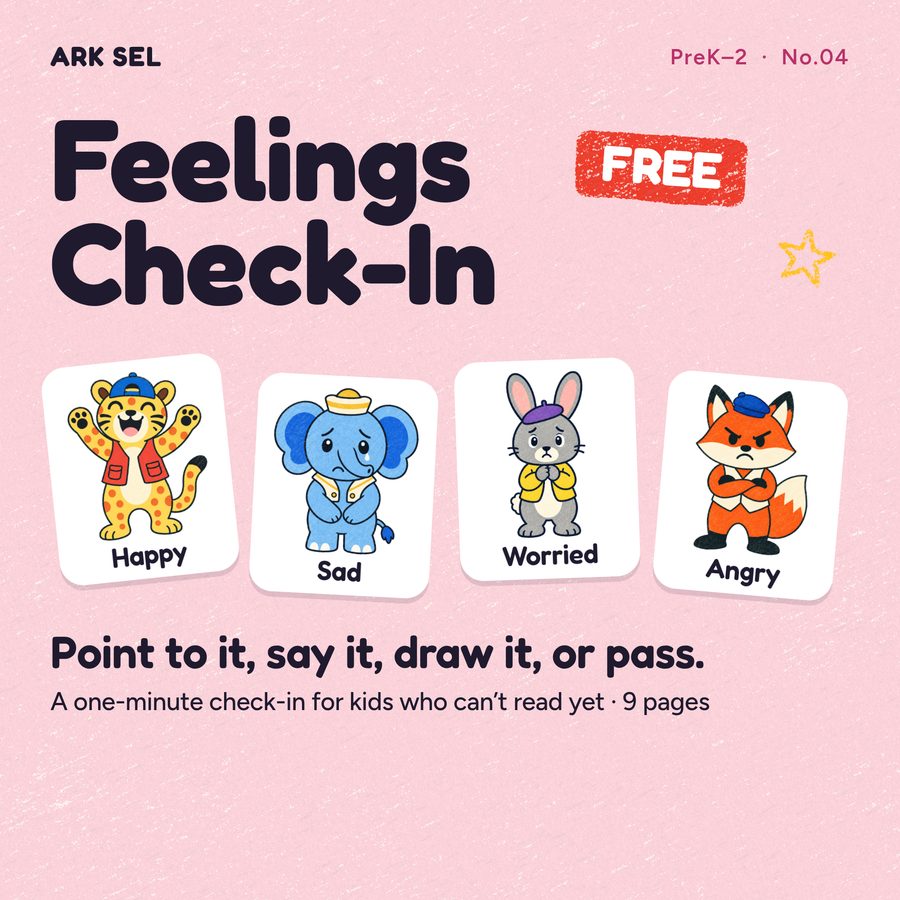
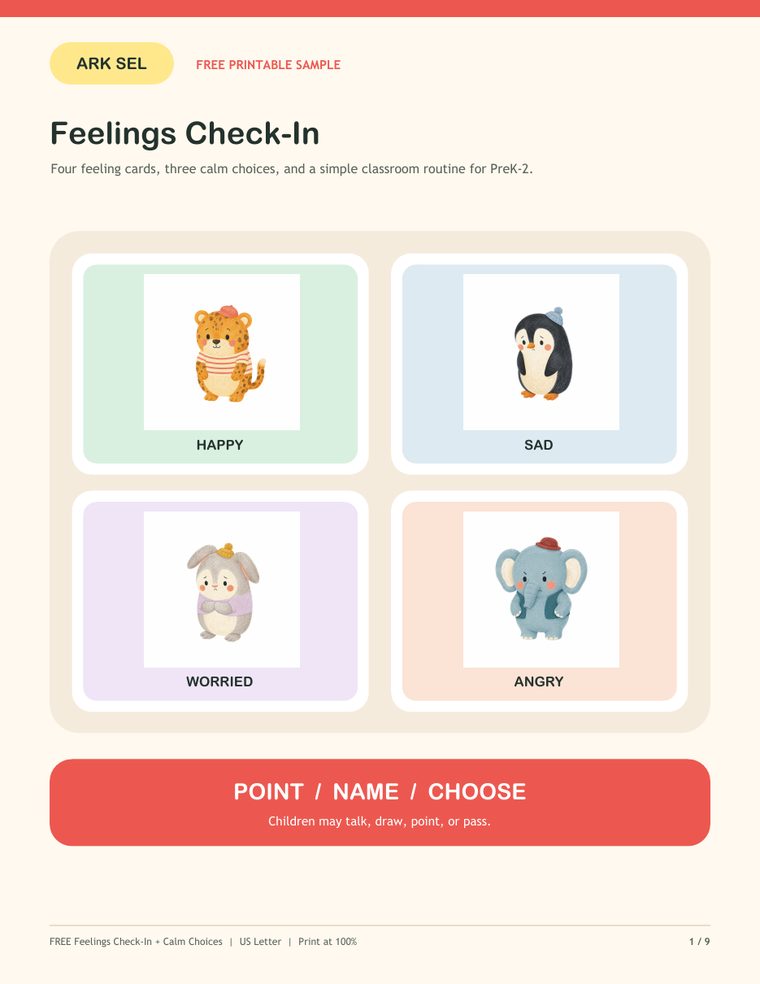
- Point. Hold up the four cards: happy, sad, worried, angry. Each child points, says the word, doodles it, or passes.
- Choose. They pick one of three calm choices: a slow breath, drawing or doodling, or asking a trusted adult. You can model one first.
- Close. Ask one question: "What would help next?" A tiny answer is fine. No answer is fine too.
That's it. With a whole class it takes a little longer the first week, and then it gets fast.
Why only four feelings?
Four is plenty at the start, and four cards are easy to see from the back of the carpet. Add more once kids have those down. The full Calm Down Corner Kit has 30.
When to do it
Arrival and morning meeting are the usual times. After recess or lunch is good too, and so is right before that one lesson that always goes sideways. Whatever time you pick, keep it the same, because kids relax when they know what's coming.
Let them pass
This is the part people skip. Passing is a real choice, and kids should be able to tell. If a kid's morning has been awful, they shouldn't have to tell twenty classmates about it. "Pass" still tells you something, and you can check in quietly later.
A couple of phrases that help, straight from the printable:
- "Would you like help, space, or a quiet minute?"
- "You can point. You can tell me later. You can pass."
- "We can choose one small step together."
Model it yourself first
Go first for the first few days. Point to a card and say something real but small, like "I'm a little worried because the copier was broken this morning. I'm going to take a slow breath." They'll copy what you do long before they copy what you say.
What if a child picks "angry" every single day?
That's information, not a problem with the routine. Don't make a big deal of it in front of the group. Catch them later when it's quiet and ask what's been going on. And if a child tells you something that worries you about their safety, follow your school's procedures right away. A check-in is an everyday classroom routine. It isn't an assessment and it doesn't diagnose anything.
What's in the free download
- A one-page quick start for the teacher
- 4 feelings cards to cut out (happy, sad, worried, angry)
- 3 calm choice cards (slow breath, draw or doodle, ask a trusted adult)
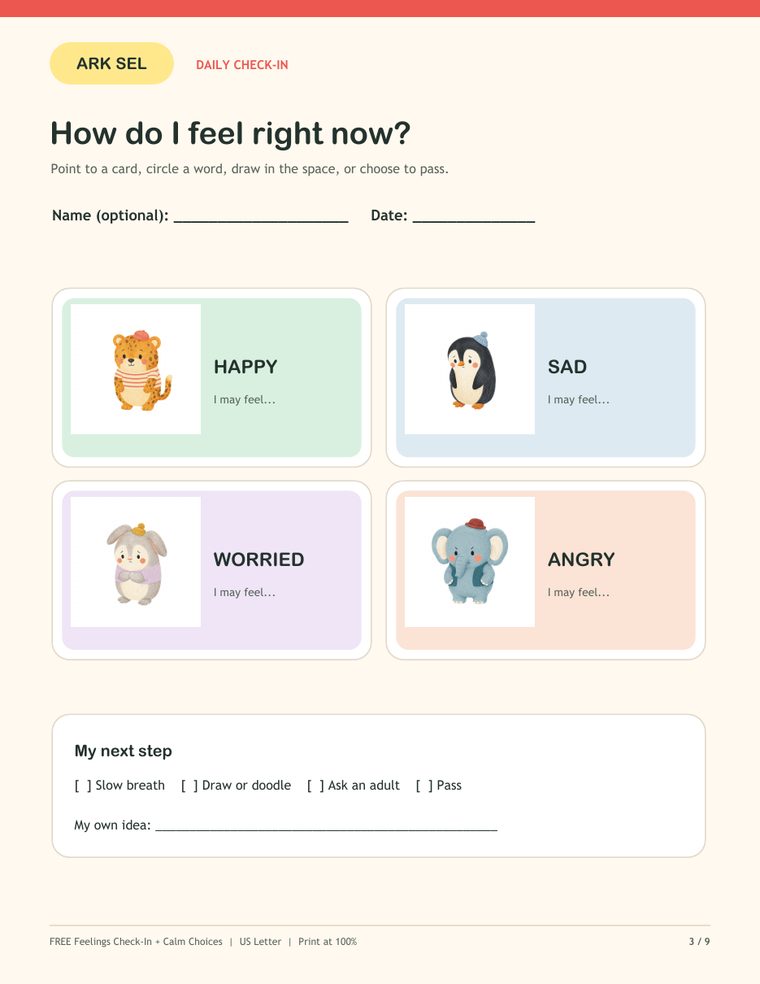
- A daily check-in sheet
- An optional "My feeling. My choice." page
- A printing checklist
It's a PDF on US Letter paper. Print at actual size (100%). Cut out the cards once. Copy the check-in sheet whenever you run out.
Free on Gumroad (enter $0) or free on TPT.
If you're also building a corner for the calm choices to live in, the calm down corner guide walks through setup, rules, and what to say.
Questions teachers ask
Can I use this with non-readers?
Yes. That's who it was made for. Pointing counts as an answer.
Do I need to laminate the cards?
No. Laminating helps them last. Plain paper works too.
Can I use it at home?
Sure. Nothing in it is classroom-only.